The Seville issue
Inside Seville's Royal Alcázar Without the Queue
A thousand years of palace sold in thirty-minute slices: when to book your entry, which rooms repay standing still, and what to do with the hour before your slot.

By Camille RousselThe city, barrio by barrio
By half past nine the Patio de Banderas holds a thin, shuffling crowd, phones at arm's length, every screen showing the same thirty-minute window, everyone waiting on a gate in a plain brick wall that gives away nothing at all. Behind that wall are several palaces, stacked on top of each other over a thousand years and still, technically, in use. The Alcázar is the rare great monument that rewards slowness, and its ticketing system is built to deny you exactly that.
What is behind the wall
The Real Alcázar de Sevilla (Santa Cruz, through the Puerta del León) is usually introduced as a Moorish palace, which is true of its bones and misleading about everything else. A fortress went up on this ground in the tenth century; the Almohads walled and extended it in the twelfth, leaving the fragile stucco arcades of the Patio del Yeso that most visitors walk straight past; Castilian kings took the city in 1248 and kept building. The palace people photograph is the one Pedro I raised in the 1360s, a Christian king's commission executed by Muslim craftsmen brought from Granada and Toledo in the Mudéjar idiom: plaster lacework, carved cedar ceilings, tile dados running waist-high through every room. Above its entrance an Arabic inscription praises the sultan Don Pedro, set directly alongside Castilian lettering, and that one facade explains the building better than any panel inside it. Alfonso X's Gothic palace sits next door with ribbed vaults and later tile panels; Charles V added a Renaissance layer around his wedding; the gardens go on accumulating for centuries after that. It remains the Spanish royal family's Seville residence, which is why the upper floor is ticketed separately and why uniformed staff materialise in doorways you assumed were decorative. Ten centuries of continuous occupation, and the door comes with a half-hour window.
Plan your Seville trip
Live prices from our booking partners.
Free cancellation on many rooms. We may earn a commission when you book.
The rooms that repay standing still
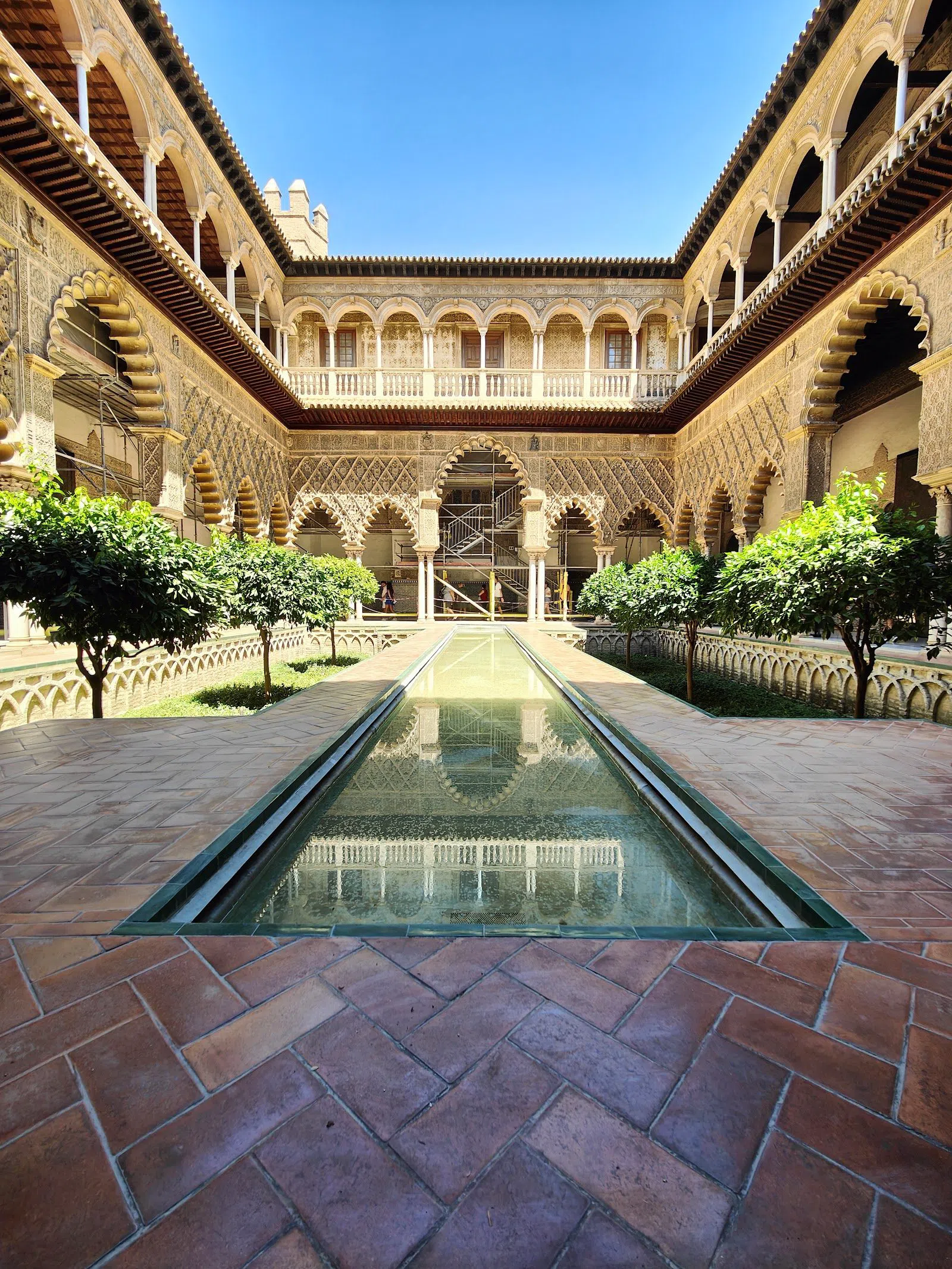
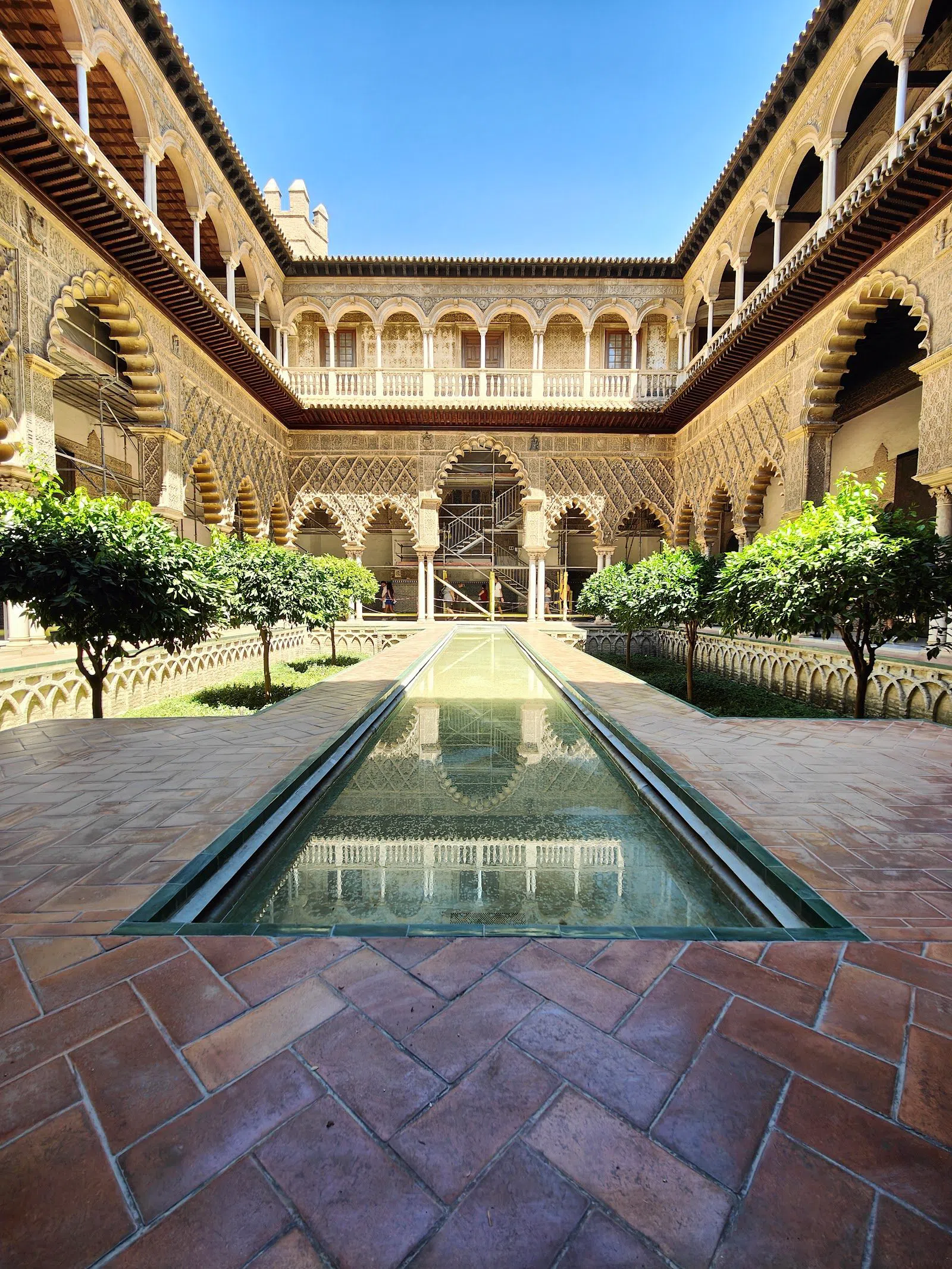
Most people move too fast through the Palacio de Pedro I and then wonder why it blurred. The Patio de las Doncellas is the centrepiece, a sunken garden rediscovered under later paving, framed by scalloped arches and a long reflecting channel, and it is also the single worst bottleneck in the building, because everyone stops at the same corner for the same photograph. Walk in, go left, and work the gallery anticlockwise against the flow. The Salón de Embajadores is the room that deserves real time: a square chamber under a half-orange dome of interlaced gilded cedar, built in the fifteenth century and best read from directly underneath with your head tipped back, which nobody does because they are busy framing the doorway. The Patio de las Muñecas, the private courtyard of the royal household, is smaller, quieter and finer than its famous neighbour.
On the other side, the Gothic palace of Alfonso X trades delicacy for cold vaulted volume, and the Sala del Almirante holds the administrative history of the city (the Casa de Contratación ran the Indies trade from here), along with Alejo Fernández's painting of the Virgin sheltering navigators under her cloak. Downstairs, the Baños de Doña María de Padilla are the most atmospheric space in the complex and the most frequently missed: a long rainwater cistern beneath the Patio del Crucero, barrel-vaulted, lit at one end, the water holding the arches upside down. The Cuarto Real Alto, the upper royal apartments, costs €5.50 on top of the general ticket and runs on its own small guided slots. It is a different experience, furnished and lived-in rather than empty and ceremonial, but photography is banned outright up there, and if your time is short the gardens are the better use of an extra hour.
The gardens are the half most visitors shortchange
Roughly seven hectares of the ticket is garden, and the crowd thins dramatically the moment you leave the palace rooms. The Estanque de Mercurio sits against the old Almohad wall with the Galería del Grutesco running above it, a rampart turned into a rusticated walkway and the best elevated view of the whole site. Below it the formal parterres give way to the Jardín de las Damas, the hedge maze, the Pavilion of Charles V with its tiled interior, and finally the looser English garden at the far end, where the planting stops pretending to be seventeenth-century and the peacocks are unbothered by anyone. Plan to spend at least an hour out here. The honest allowance for the whole visit is two to three hours; one hour is a sprint that will leave you with nothing but the Doncellas photograph, and three to four is reasonable if you intend to sit down in the gardens, which you should.
How the ticket works and where the queue actually forms
General admission is €15.50, plus a €1 fee if you book online, which you should. Reduced entry is €8 for over-65s and students aged 14 to 30; under-13s go free; the Cuarto Real Alto adds €5.50. Entry is by named, timed thirty-minute slot, and the slot is a window to enter, not a limit on how long you may stay. There is a free Monday late slot (18:00 to 19:00 from April to September, 16:00 to 17:00 from October to March), but it must be pre-booked online and it releases and disappears quickly; turning up hopefully on a Monday evening is not a plan.
Patio de Banderas (Santa Cruz, immediately outside the gate) is where the reality of the queue lives. It is an open public square with no door policy, the same-day box office opens at 09:00, and it takes card only, no cash. If you are travelling as a group, this is the meeting point, and three things matter: every single person needs their own named timed ticket, everyone needs physical ID at the gate (DNI, NIE or passport; a photo on a phone is not it), and parties over twenty are normally expected to arrive with a licensed guide and headsets rather than as a loose crowd. The arch at the end of this square frames the best free photograph of the Giralda in the city, which is a decent consolation while you wait.
If you would rather not manage any of that, guided combinations covering the palace and the cathedral run seven days a week, and the booking platform flags the leading one as likely to sell out, which in practice means what everything else here means: decide a week or two ahead rather than the night before, especially for a weekend.
Rules at the gate and who will find it hard
No food, no drink, no large bags, no tripods, no selfie sticks, no flash anywhere, and no photography at all inside the Cuarto Real Alto. The staff enforce all of this without discussion. The ground is historic and therefore uneven (cobbles, worn marble, shallow steps between courtyards, a ramped descent to the baths), so wheelchair users and anyone with limited mobility should accept that parts of the route will need a detour, and that the garden paths are gravel. There is no cloakroom worth relying on, so travel light. Shade is intermittent in the gardens and absent in the Montería courtyard where you queue to enter, which matters more than it sounds in July.
Is it worth it
Yes, with one qualification. The Alcázar is not a museum of a dead culture; it is a working royal residence that has been continuously inhabited and rebuilt for over a thousand years, and that continuity is the thing you are paying €15.50 to stand inside. The leading guided option here holds 4.6 out of 5 across 5,486 traveller reviews, which is about as close to consensus as a major monument gets. The qualification is crowding: between roughly 11:00 and 14:00 in spring the Patio de las Doncellas is a scrum, and if that is your only experience of the place you will leave underwhelmed and €15.50 lighter. It suits anyone with an interest in architecture, gardens or Spanish history, and couples and small groups manage it easily. It works with children too, who tend to like the maze and the fish far more than the ceilings. Very large groups should expect to be split and guided, not herded.
Best time to go
Opening is 09:30 to 19:00 from April to September and 09:30 to 17:00 from October to March, with last entry an hour before closing, and the site shuts on 1 and 6 January, Good Friday and 25 December. The two good windows are the first slot of the day and the last two hours. The first slot gets you the Doncellas and the Embajadores before the guided groups cycle through, but the gardens are still in shade and the low light is awkward. The late window is better for the gardens and for the walls (the Grutesco gallery at the end of a summer afternoon is the best twenty minutes on the site), and the palace rooms empty out progressively as closing approaches. Midweek beats weekends. Spring and autumn are the busiest seasons in Seville generally and the Alcázar follows; Semana Santa and the April feria week put the whole centre under pressure. July and August are quieter inside the rooms because the heat is brutal, in which case take an early slot and spend the afternoon somewhere with a ceiling. Whenever you go, book the slot in advance rather than arriving at the Patio de Banderas box office and negotiating with whatever is left.
What to put on either side of your slot
The best answer to a slot that is still an hour away is the Archivo General de Indias (Santa Cruz, directly across the square), a free walk-in with no booking required: Tuesday to Saturday 09:30 to 17:00, Sundays and holidays 10:00 to 14:00, closed Mondays, with groups over twenty needing to request an appointment. It holds the documentary record of the Spanish Americas in a cool sixteenth-century exchange house, and it costs nothing.

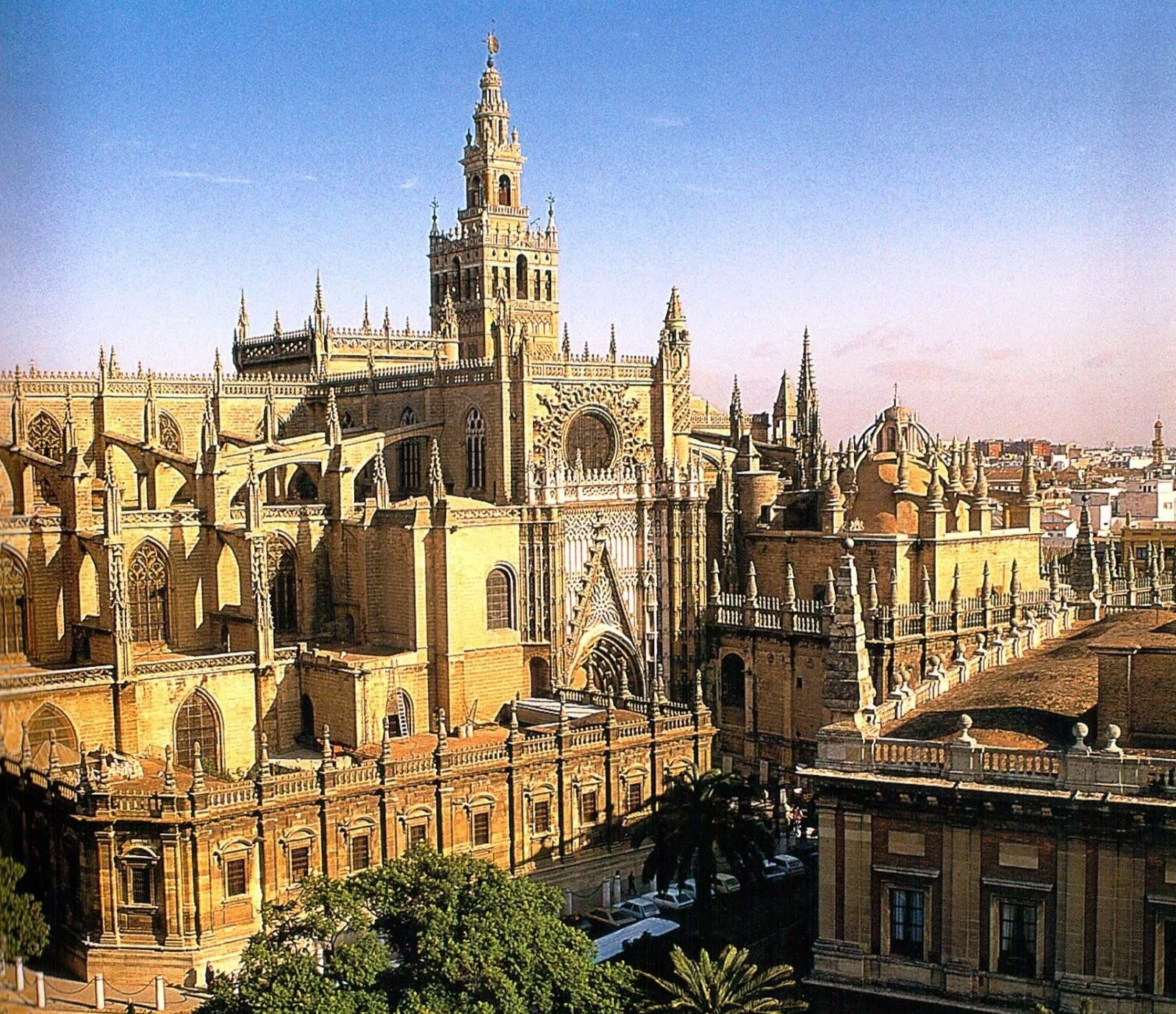
The obvious pairing is the Catedral de Sevilla and La Giralda (Santa Cruz, 300 m from the Alcázar gate), around €13 online or €14 at the office, €7-8 reduced, under-13s free, with the Church of El Salvador included. Book this one first and the Alcázar around it: cathedral tickets release only sixty days ahead and go days in advance in spring and autumn. The Giralda climb is thirty-four ramps with no lift, so large or mobility-limited groups should plan to split rather than all start up together.
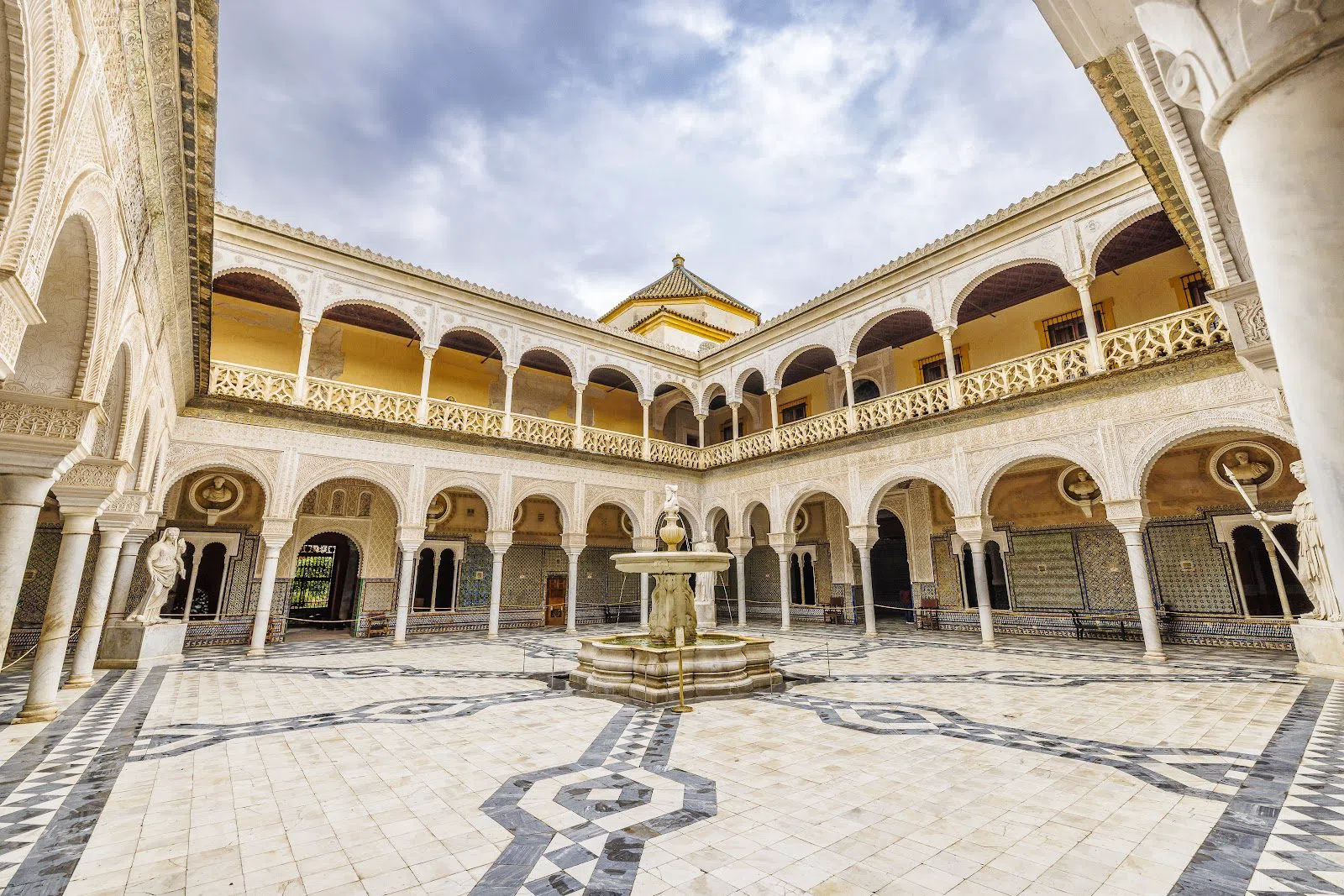
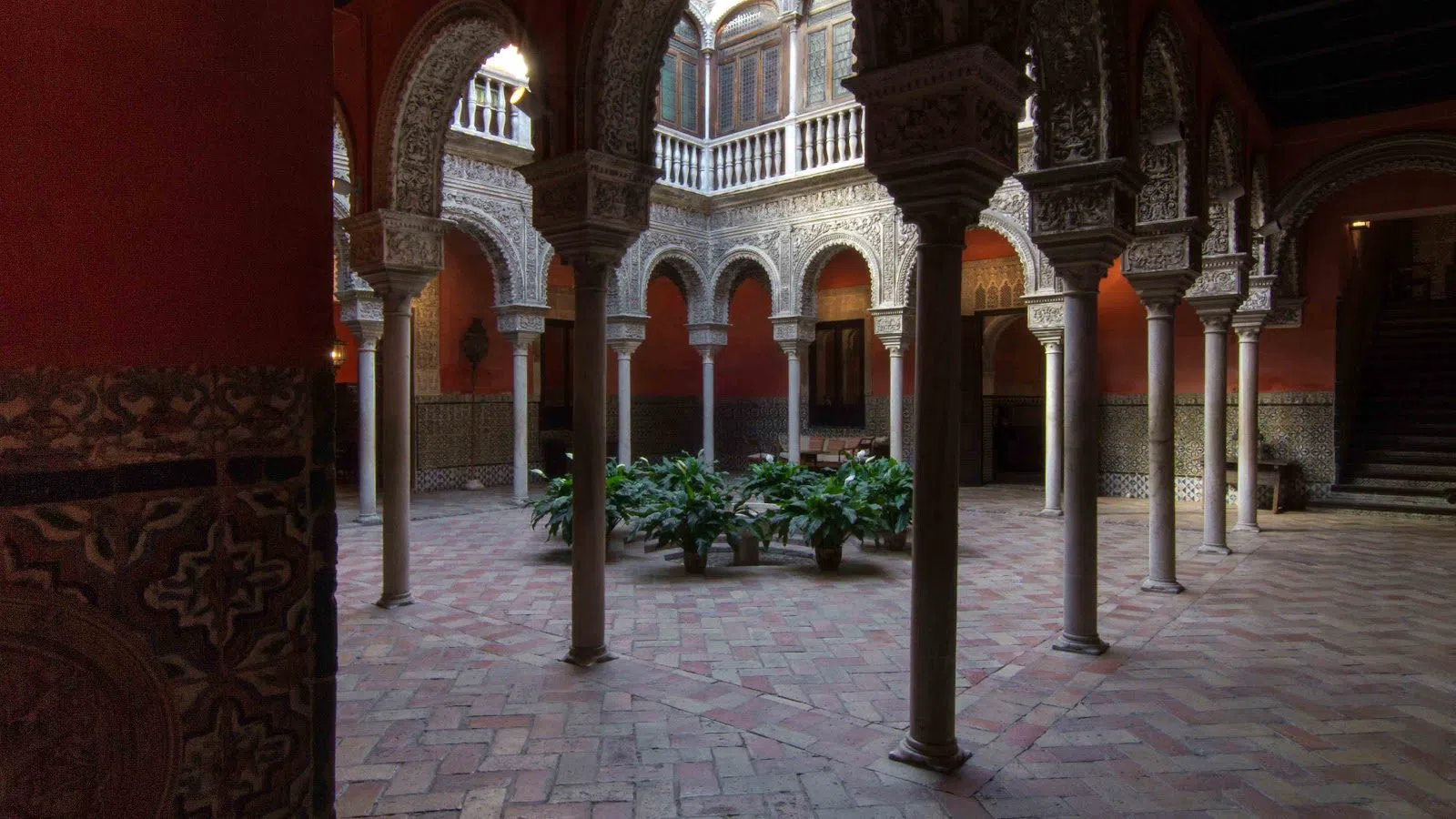
If the palace left you wanting the same architecture without the crowd, Casa de Salinas (Santa Cruz, three minutes up Mateos Gago) is a private family home running guided slots roughly every half hour in English and Spanish: €12 general, €10 for groups of ten or more, €6 for under-11s and visitors with disabilities, free under six. The caveats are short summer hours, 10:00 to 14:00 from 15 June to 30 September, and rooms small enough that big groups get split. Twelve minutes north, Casa de Pilatos (San Bartolomé) gives you the same Mudéjar-meets-Renaissance conversation at aristocratic scale with no timed-entry pressure, open 09:00 to 18:00 daily, from €12 for the ground floor and from €19 for the whole palace including the guided upper storey, free for EU citizens on Monday afternoons.
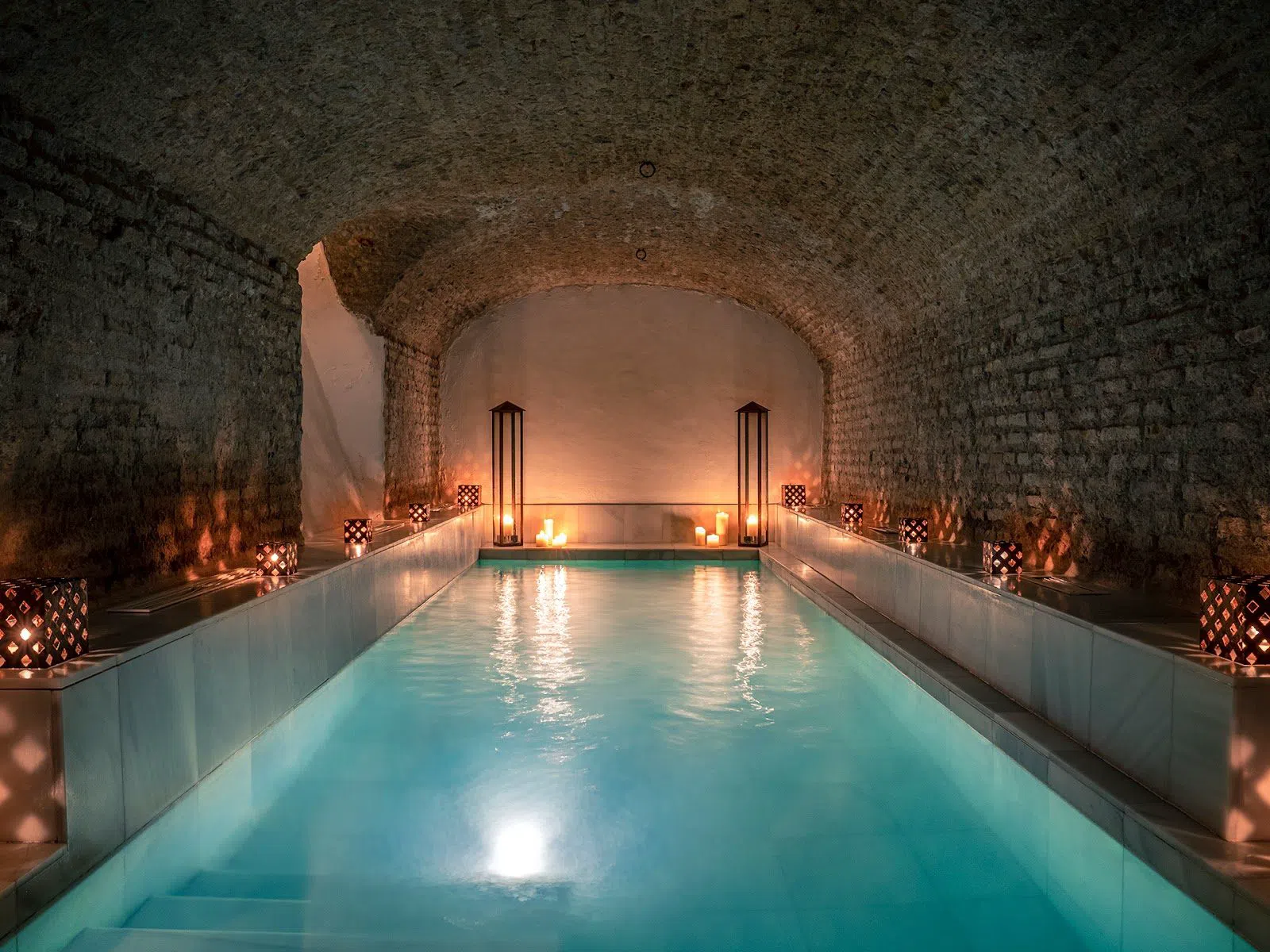
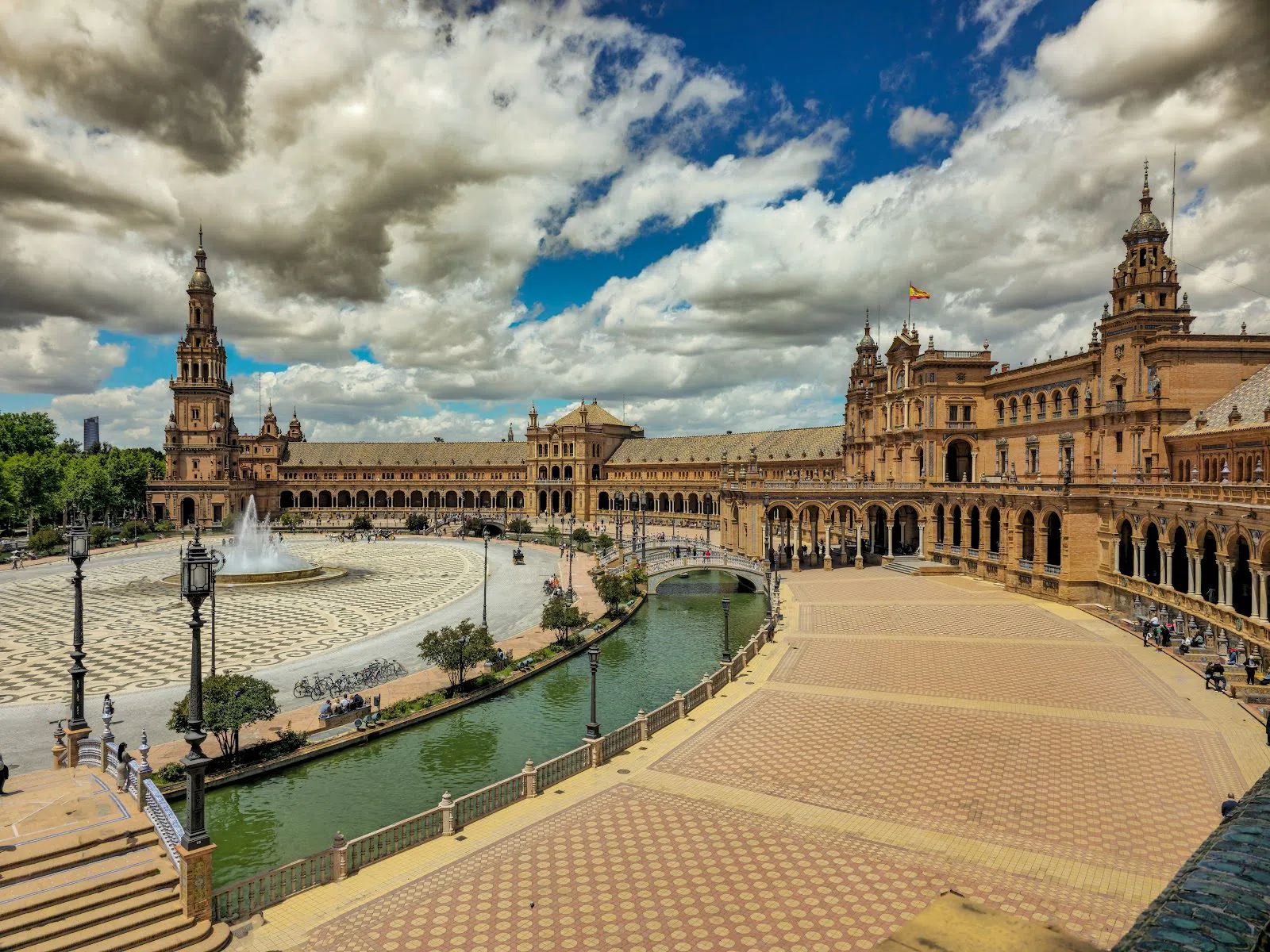
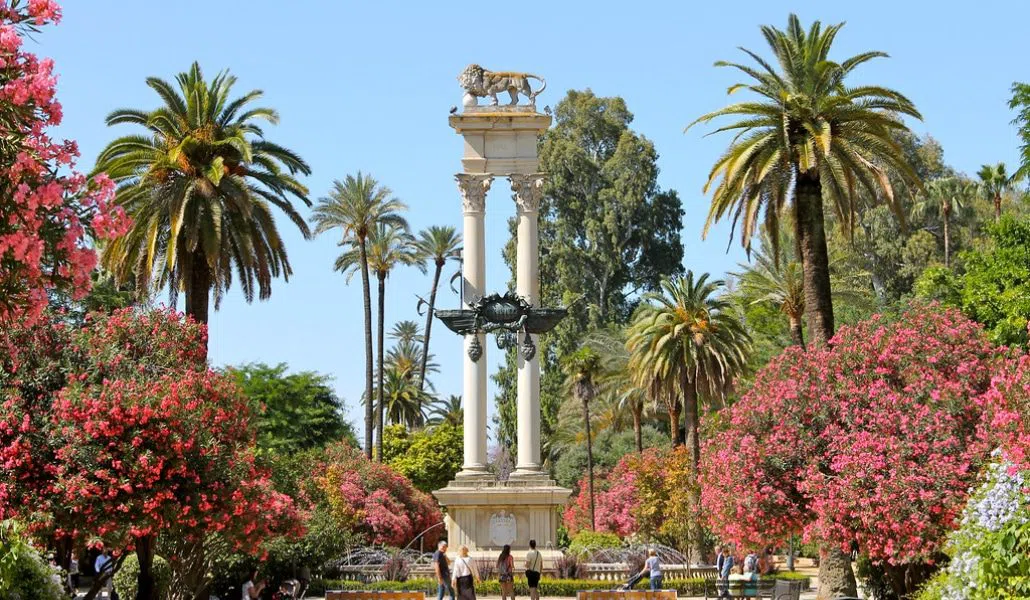
For air afterwards, Jardines de Murillo (Santa Cruz, against the Alcázar's east wall) is open 08:00 to 22:00, midnight in summer, and takes about fifteen minutes to stroll. It is also the natural route onward to Plaza de España (Parque de María Luisa, ten minutes further), still free to walk into, with rowing boats hired in small batches at the canal landing. A roughly nine-month, €1.2m restoration of the Navarra and Aragón gate ceilings is scheduled to begin in mid-2026, so expect hoardings across part of the arc before you build an evening around it. And if the Baños de Doña María de Padilla got to you, AIRE Ancient Baths Sevilla (Santa Cruz, two minutes away on Calle Aire) runs the modern version: pre-booked 90-minute slots only, from roughly €26-40 for the thermal circuit up to about €210 for the four-hour signature treatment, with weekends and same-day slots going first and no walk-ins at all. Slot it before or after your palace entry, never between. For everything beyond this quarter, the wider Seville guide covers the rest of the city.
Eating and drinking within five minutes of the gate
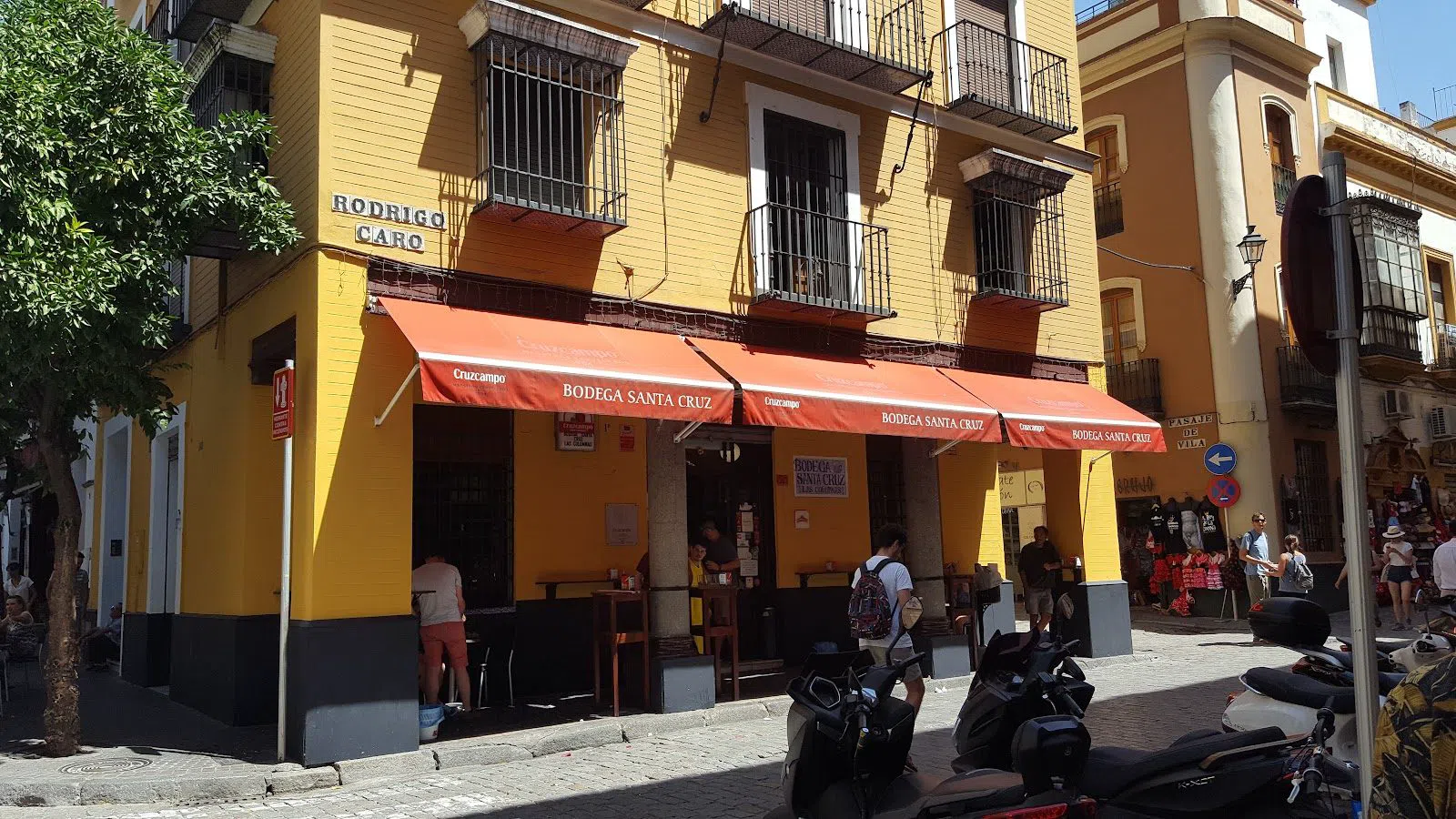
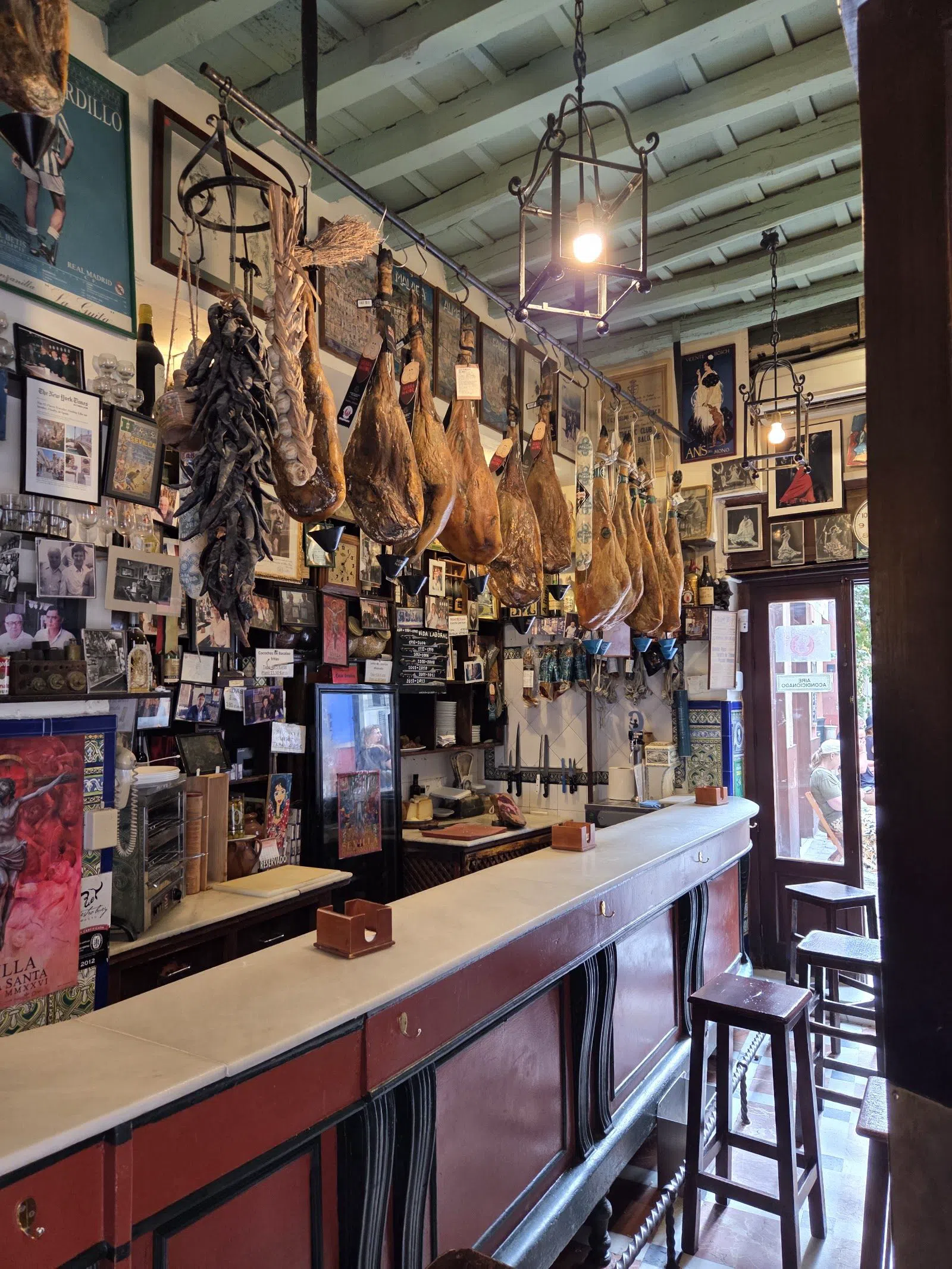
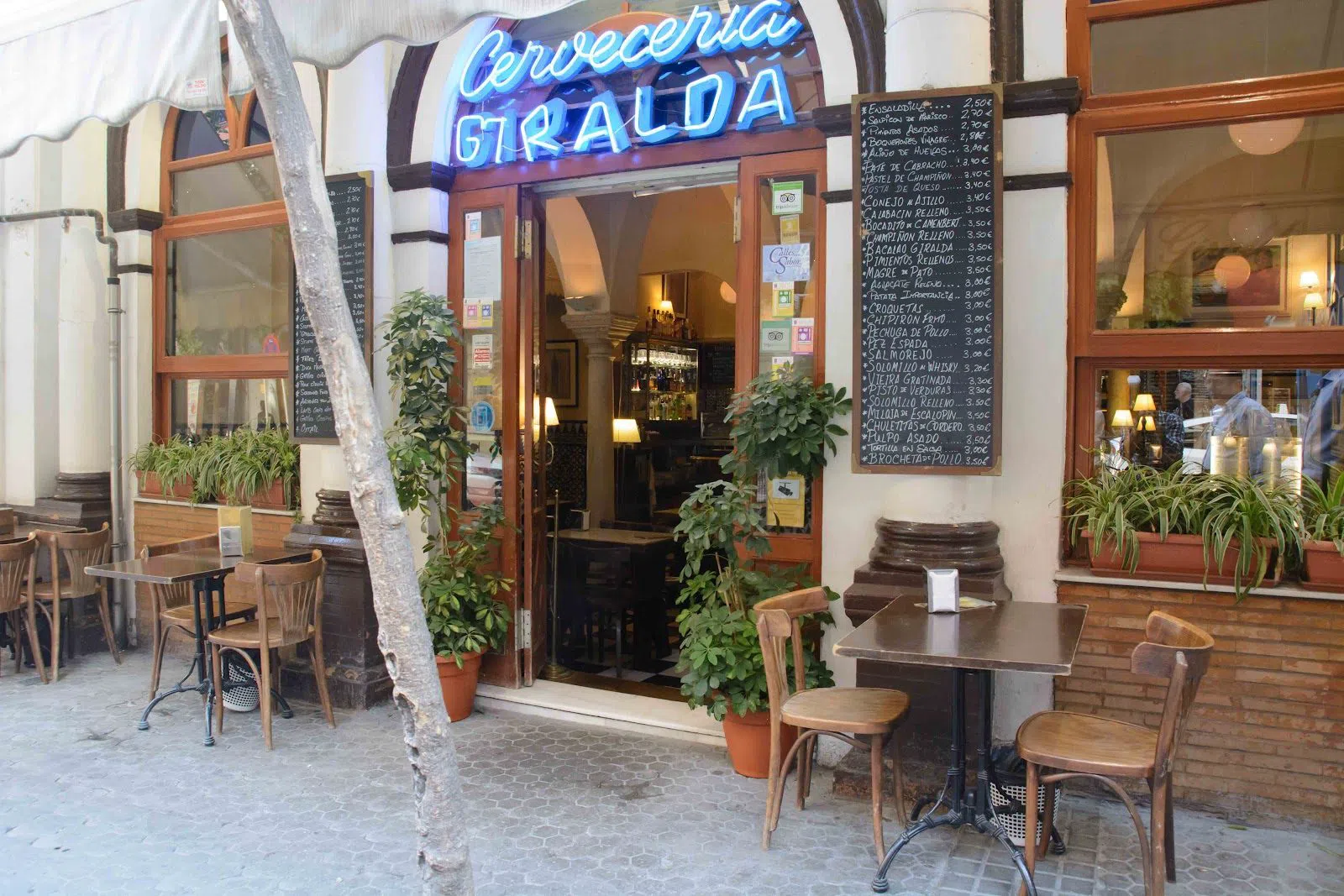
Cervecería Giralda (Santa Cruz, Mateos Gago) is the best-value Moorish interior in the quarter and you do not pay admission for it: restoration work uncovered the García Jofre bathhouse beneath the bar, eighty-nine skylights and surviving painted plaster, so you get Almohad architecture with a beer. Tapas run roughly €3-5 and raciones €10-18, it is open daily from 08:00 to midnight, and it takes no bookings for the counter, so big groups will struggle at peak and should go off-hours or split. Café Bar Las Teresas (Santa Cruz, Calle Santa Teresa) is the right call for a proper Iberian ham plate between palace and cathedral, open 10:00 to 01:00 daily, tapas around €4-6 and ham plates €15-25; it is a counter-and-standing bar on a one-car lane, so small groups only and no realistic large-group seating. Bodega Santa Cruz Las Columnas (Santa Cruz, three minutes from the gate) is the cheap, loud counterweight: tapas around €2.50-3.50, beer about €2, standing room only, no reservations, and groups end up drinking on the street, which is the normal way to use it. Arrive before 13:00 or after 16:00 if you want to be served.
For the view, La Terraza del EME at EME Catedral Mercer (Santa Cruz, facing the cathedral) is the nearest thing to eye level with the Giralda. Cocktails run roughly €14-18, capacity is small, larger groups should reserve, and the terrace turns restaurant from spring to autumn. Go at dusk and accept that you are paying for the sightline rather than the drink. ENA Sevilla at the Hotel Alfonso XIII (Puerta de Jerez, three minutes from the Alcázar's south side) is the late option that still looks the part, open 12:30 to midnight with tapas plates roughly €8-20; it takes non-guests and group bookings, the terrace is the part worth asking for, and the hotel's pool restaurant is temporarily closed while the terrace and Bar Americano are not.
Closing the day with flamenco
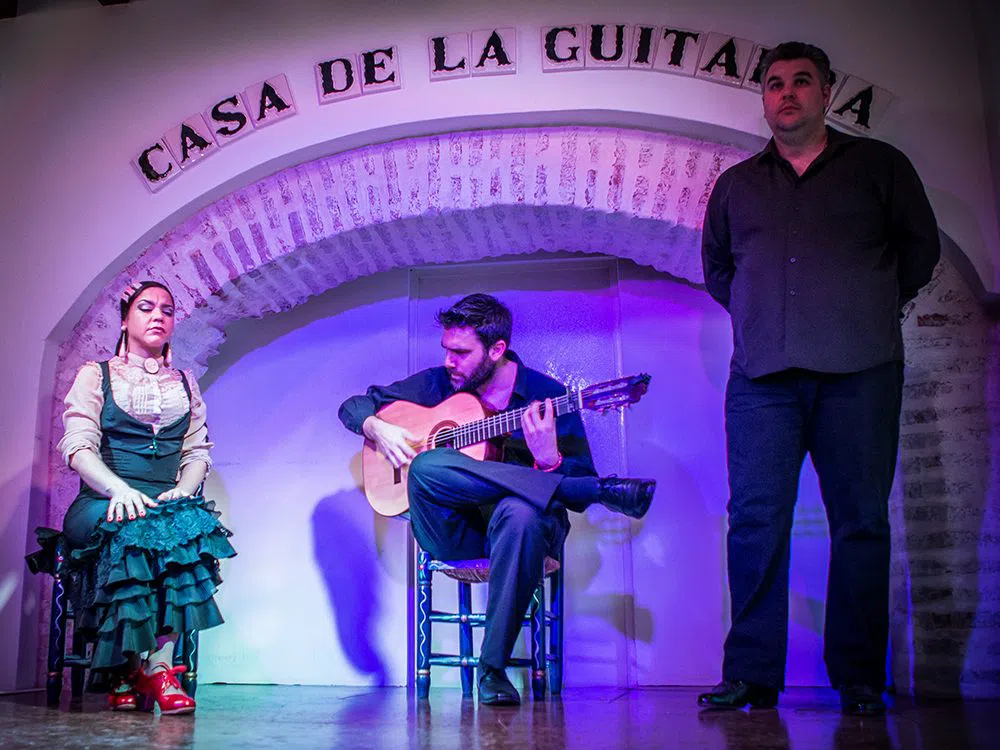
Museo del Baile Flamenco (Centro, five minutes north) is Cristina Hoyos's museum and the only place nearby that explains the form before you watch it: €6 for the museum alone, €29 for a show (€22 reduced, €15 for ages 6-12), €33 combined. There is a daily noon matinée, which makes it workable on the same day as a morning palace slot. For the evening itself, Casa de la Guitarra (Santa Cruz, Mesón del Moro) has sixty seats, shows daily at 21:00, and tickets around €17-22; there is no dinner and no floor-show padding, just the music and José Luis Postigo's guitar collection on the way in. Groups have to reserve directly by phone or email, because sixty seats go.

Practical notes
Everything above sits inside a twenty-minute walking radius, and walking is the only sensible way to move in Santa Cruz: the lanes defeat taxis, and the tram stops at Puerta de Jerez and Archivo de Indias put you at the door. From the airport, the EA bus runs to the centre; from Santa Justa station it is a flat twenty-five-minute walk or a short taxi. Carry a card, since the Alcázar box office at the Patio de Banderas takes card only, but keep €20-30 in cash for the standing bars, which are faster with coins. Carry physical ID for the palace gate, not a photograph of it.
On budget, a straightforward day runs about €15.50 for the Alcázar plus €13 for the cathedral, €15-25 for tapas across two bars, and nothing at all for the Archivo, the Murillo gardens and Plaza de España, so call it €50-60 a head before any show. Add €29 for flamenco or €26-40 for the baths if you want an evening with structure. Timing decides the quality of the day more than anything else: book the cathedral first because of its sixty-day release, build the Alcázar slot around it, take either the first entry or the last two hours, and leave the middle of the day to a shaded bar. If you are still choosing where to sleep, the Seville hotel search will tell you what staying inside this ten-minute radius costs, and being able to walk back out to the Patio de Banderas at 09:00 is worth more than any upgrade.
Before you go
How long do you actually need inside the Royal Alcázar?
Two to three hours is the honest allowance, and three to four if you intend to sit down in the gardens. One hour is a sprint that gets you the Patio de las Doncellas and little else. The gardens alone are worth a full hour, and the crowd thins the moment you leave the palace rooms.
Can you turn up without a ticket, or do you have to book ahead?
There is a same-day box office on the Patio de Banderas that opens at 09:00 and takes card only, but entry runs on named, timed thirty-minute slots and the good ones go first. Book online (€15.50 plus a €1 booking fee) and bring physical ID (DNI, NIE or passport) for the gate, because every person needs their own named ticket.
How does the free Monday entry work?
Mondays have a free late slot, 18:00 to 19:00 from April to September and 16:00 to 17:00 from October to March, but it has to be booked online in advance. You cannot walk up on a Monday evening and claim it, and the allocation disappears quickly, so plan for it rather than keep it as a fallback.
Is the Cuarto Real Alto worth the extra €5.50?
The upper royal apartments are genuinely different, furnished rather than empty ceremonial rooms and run on their own small guided slots, but photography is banned outright inside and it eats time. If your visit is tight, spend that hour in the gardens and the Grutesco gallery instead; if you are an architecture or interiors person with three hours or more, add it.
Can you do the Alcázar and the Cathedral on the same day?
Easily, since they are 300 m apart. Book the cathedral first, because its tickets release only sixty days ahead and sell days in advance in spring and autumn, then fit the Alcázar slot around it. Allow for the Giralda climb being thirty-four ramps with no lift, and put a tapas stop between the two rather than running them back to back.